

Milan, Italy is the country’s second city and its only real metropolis: banks, agencies, design studios, two football clubs and a cathedral that took six centuries to finish. It rewards a short, well-planned visit and punishes an aimless one, because the good things are not lined up along one pretty street the way they are in Florence.
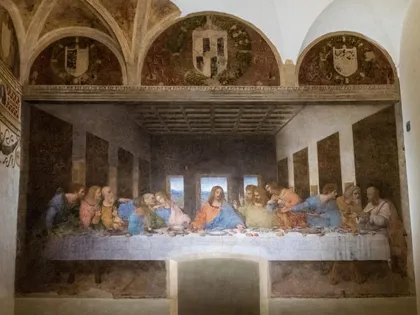
Two full days is the honest answer to how long to stay. In that time you can see Leonardo’s Last Supper, climb the Duomo terraces, walk one great gallery and spend an evening on the canals. This page explains what the city is, how it is laid out, and where the money goes.
What Milan is for a visitor
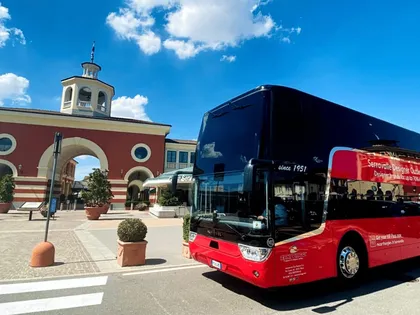
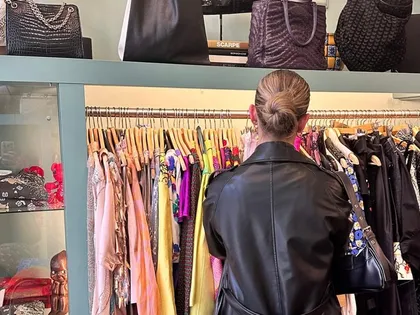
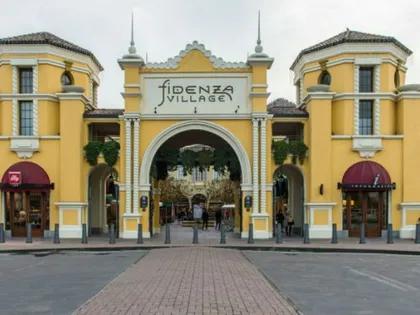
Fashion. The Quadrilatero della Moda — Via Montenapoleone, Via della Spiga, Via Sant’Andrea, Via Manzoni — is a genuine industry district, not a tourist reconstruction. Window-shopping is free and the architecture is worth the loop even at flagship prices. The outlet runs to Serravalle and Fidenza on outlets and shopping are where people actually buy.
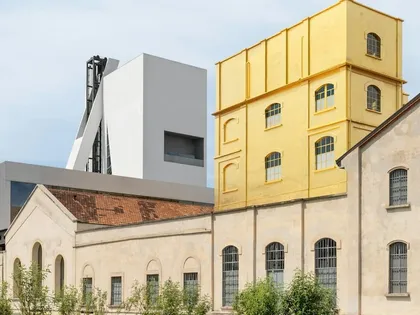
Design. Milan invented the modern design fair. The Salone del Mobile in April turns the whole city into showrooms, and year-round the Triennale, Fondazione Prada and the Porta Nuova towers give you the built version of the same idea.
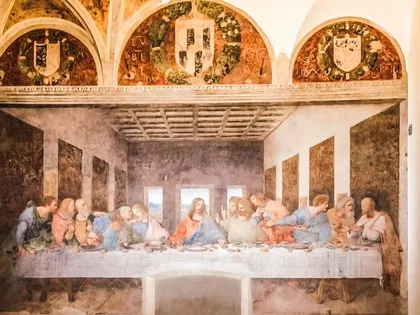
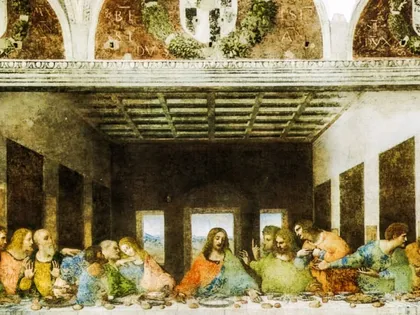
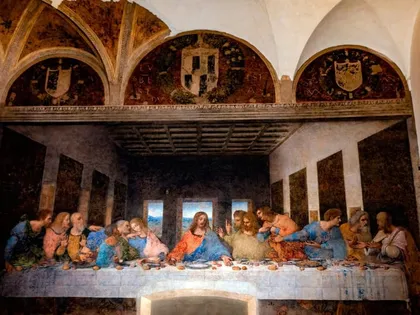
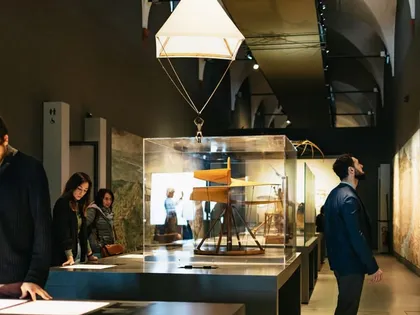
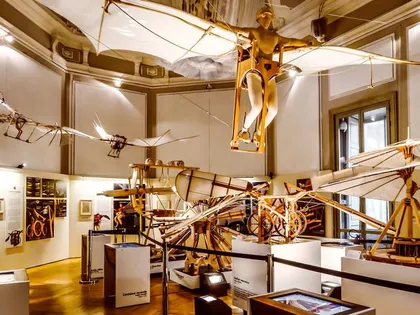
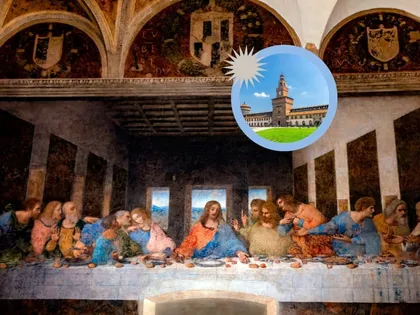
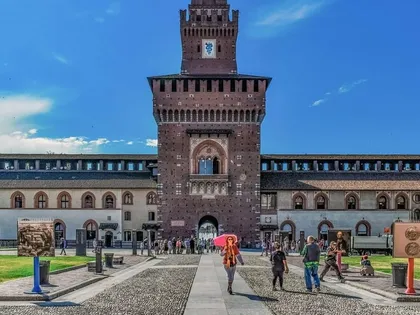
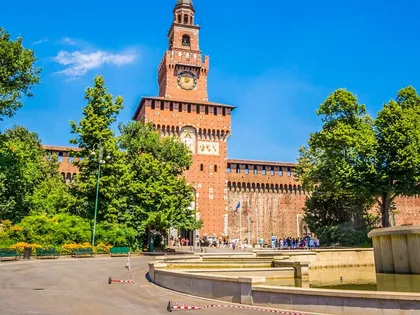
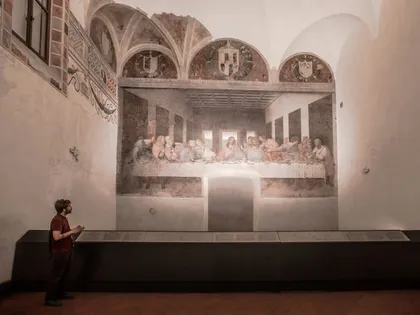
Leonardo. He worked here for roughly two decades under Ludovico Sforza. The Last Supper is the headline, but there is also his Sala delle Asse in the Castello Sforzesco, the machine models at Leonardo3 and the Leonardo galleries in the national science museum. See Leonardo museums.
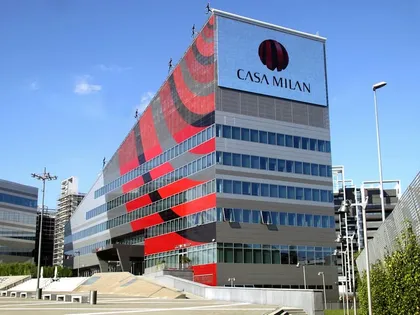
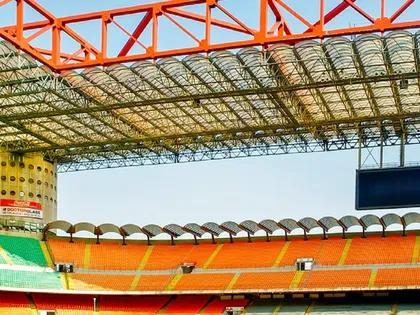
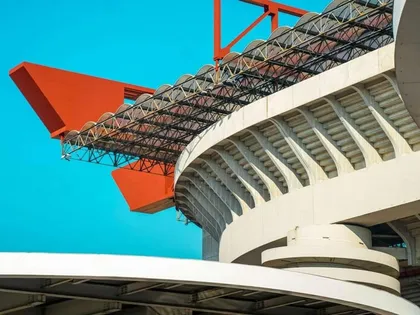
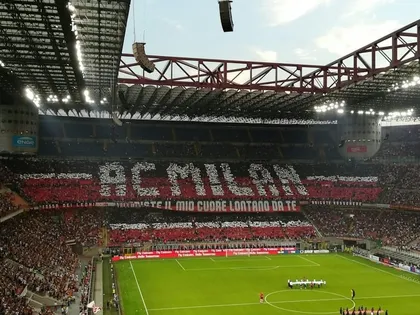
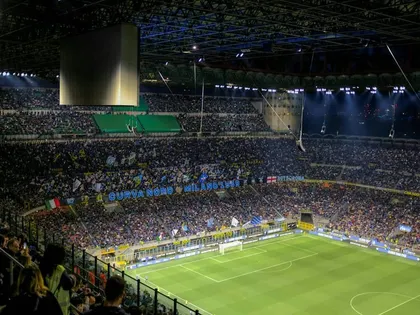
Football. AC Milan and Inter share Stadio Giuseppe Meazza, universally called San Siro. A stadium tour with the museum is €39 on Tiqets, and metro M5 stops at the door. San Siro covers tours and match days.
Aperitivo. Somewhere between a drink and dinner: you order a Negroni or a spritz between roughly 18:30 and 20:30 and food arrives with it. It is the most reliably good-value thing in Milan — see nightlife and aperitivo.

Orientation: rings, not a grid
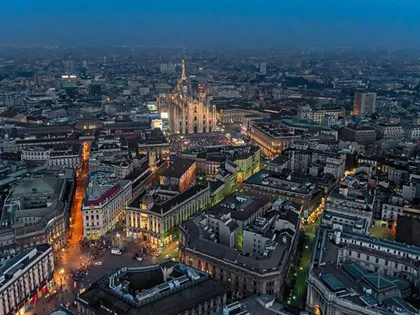
Milan is built as a set of rings around Piazza del Duomo. Get that and the map stops being confusing.
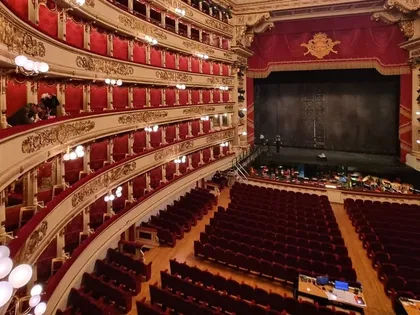
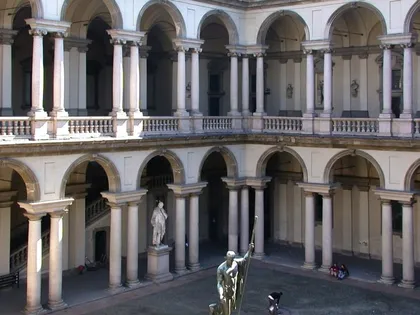
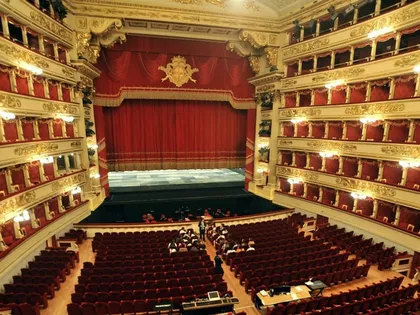
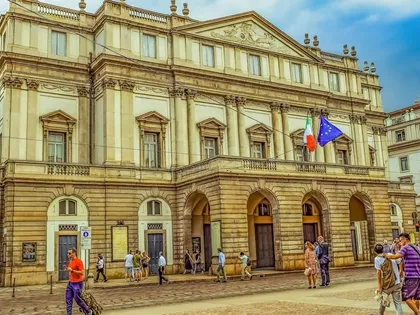
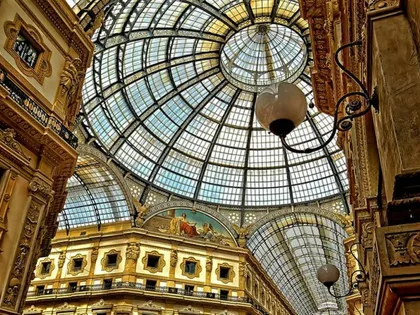
The innermost ring is the old Spanish walls, now the Cerchia dei Bastioni, and everything a first-time visitor wants sits inside it or just outside: the Duomo, the Galleria Vittorio Emanuele II, Teatro alla Scala, the Castello Sforzesco, Brera, Sant’Ambrogio.
Then a belt of neighbourhoods, each with a character worth an hour:
| Area | What it is | Nearest metro |
|---|---|---|
| Duomo | Cathedral, Galleria, La Scala, shopping | Duomo (M1, M3) |
| Brera | Cobbled art quarter, Pinacoteca di Brera | Lanza, Montenapoleone (M2, M3) |
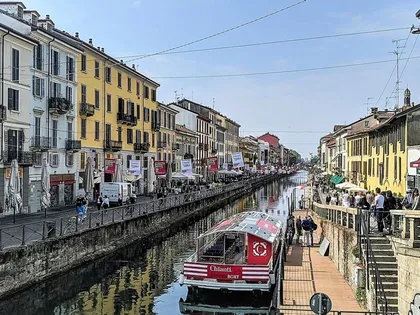
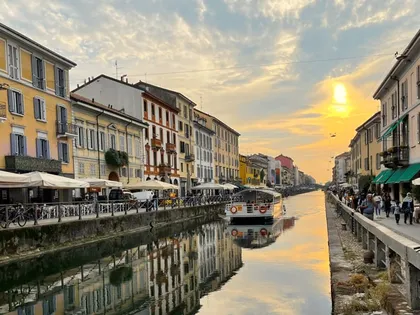
| Navigli | Canals, aperitivo, weekend markets | Porta Genova (M2) |
| Porta Nuova / Isola | Towers, Bosco Verticale, new Milan | Garibaldi, Isola (M2, M5) |
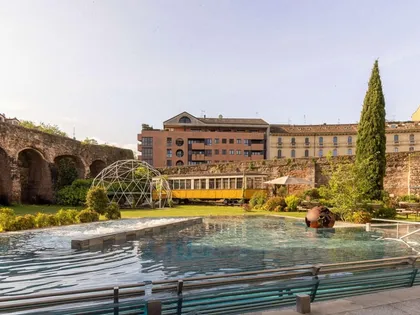
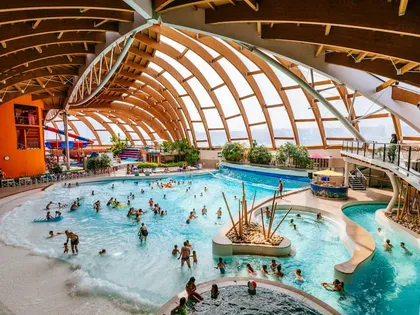
| Porta Romana | Spanish walls, QC Termemilano | Porta Romana (M3) |
| San Siro | Stadium, De Montel spa | San Siro Stadio (M5) |
| Città Studi / Lambrate | Student bars, design workshops | Lambrate (M2) |
Two of those stops are interchanges worth knowing: Cadorna is on M1 and M2, and Garibaldi FS is on M2 and M5, so you can cross between the western and northern halves of the city without going through Duomo.
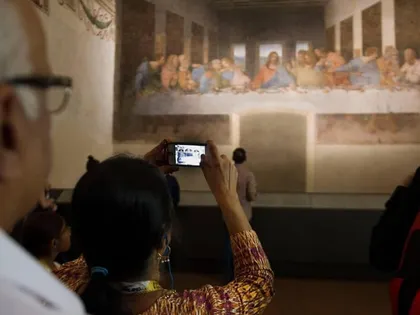
Santa Maria delle Grazie, where the Last Supper is, sits west of the castle, roughly a 20-minute walk from the Duomo. The museum’s own directions give metro M1 at Cadorna or Conciliazione, M2 at Cadorna, tram 16 to the S. Maria delle Grazie stop, or buses 50 and 169 to Via Boccaccio.
The metro, and how to pay
Five lines, colour-coded and easy: M1 red, M2 green, M3 yellow, M4 blue, M5 lilac. Duomo station is on M1 and M3. M4 opened fully in recent years and runs from Linate airport to San Babila in about 15 minutes.
A single urban ticket is €2.20 and covers 90 minutes on the metro, trams, buses and the Trenord S lines inside the Mi1–Mi3 zone, according to ATM. If you will make more than three or four trips in a day, the 24-hour ticket at €7.60 is the obvious move; there is also a 3-day ticket at €15.50 and a 10-trip carnet at €19.50.
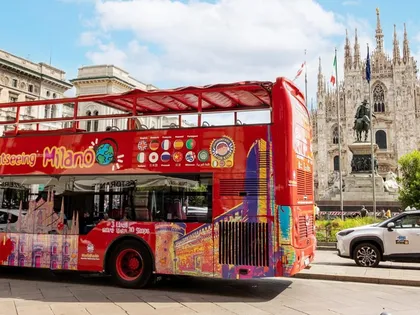
Trams matter here. The orange 1 and the wooden 1928-vintage cars on some routes are a sightseeing tour for the price of a ticket, and they cross the centre where the metro does not. Buy before you board and validate on entry.
How many days in Milan
One day. Duomo terraces at opening, the Galleria, La Scala museum, lunch, Castello Sforzesco courtyards, aperitivo in Brera. You will not see the Last Supper — that needs a booked slot.
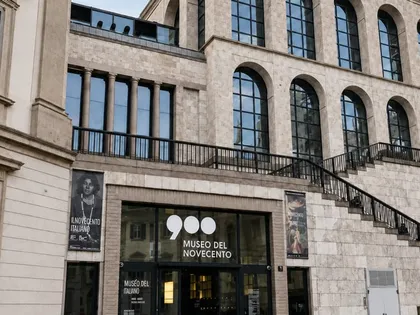
Two days. Add the Last Supper on a morning slot, one gallery (Brera or the Museo del Novecento) and a Navigli evening with a canal boat.
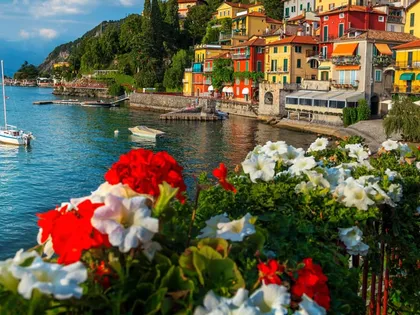
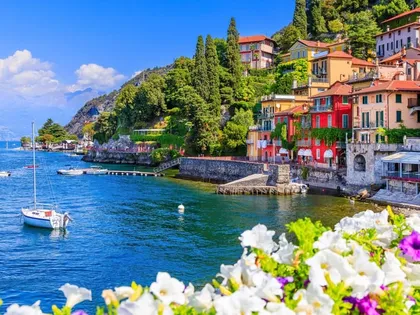
Three days. Pick a lane: San Siro plus QC Termemilano, or a Lake Como day trip from €63.50, or the science museum plus Fondazione Prada. See day trips and things to do in Milan.
Anything beyond three days and you are choosing Milan as a base for Lombardy, which is a reasonable thing to do — the lakes, Bergamo, Pavia and Verona are all inside two hours.
The eight attractions that matter
| Attraction | Price from | Time | Book ahead? |
|---|---|---|---|
| Duomo di Milano + terraces | €26 | 1.5 h | Same-week slot |
| The Last Supper | €79 guided | 1 h | Weeks — essential |
| Teatro alla Scala museum | €15.96 | 1 h | Optional |
| Castello Sforzesco museums | €20 | 1.5 h | No |
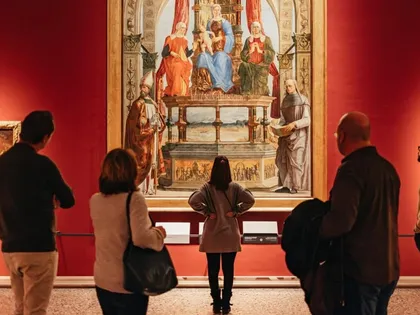
| Pinacoteca di Brera | €22 | 1.5–2 h | No |
| San Siro tour + museum | €39 | 1.5 h | Check match days |
| Museo Nazionale Scienza e Tecnologia | €13 | 2–3 h | No |
| Navigli canal boat | €19 | 50 min | Evening slots fill |
Prices are partner prices from Tiqets and GetYourGuide, checked September 2026, per person.
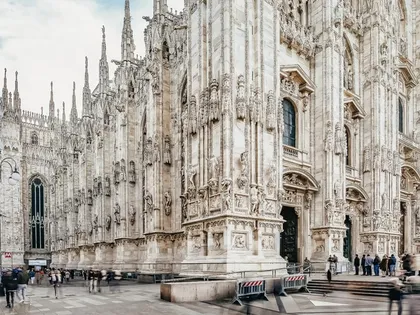
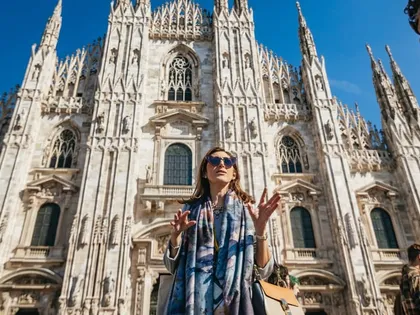
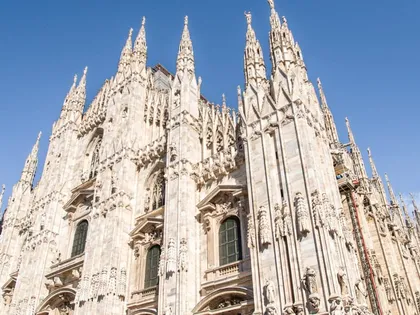
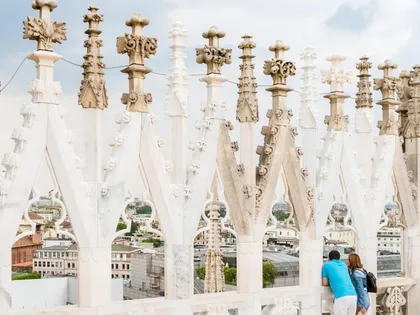
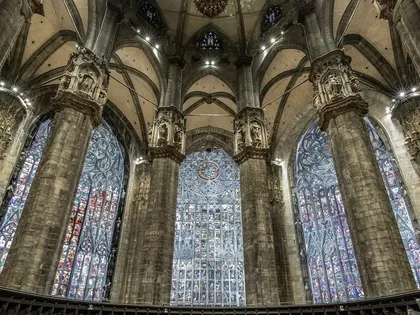
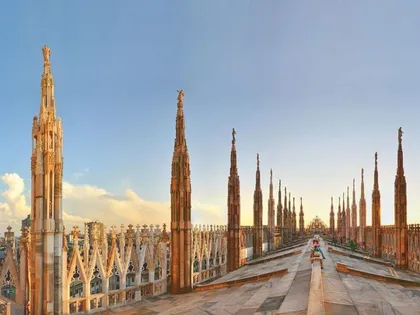
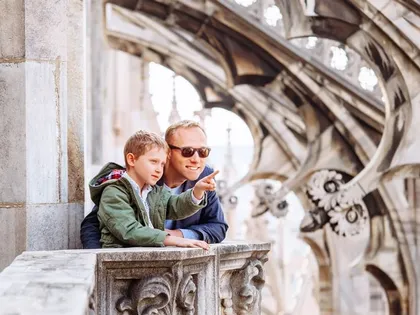
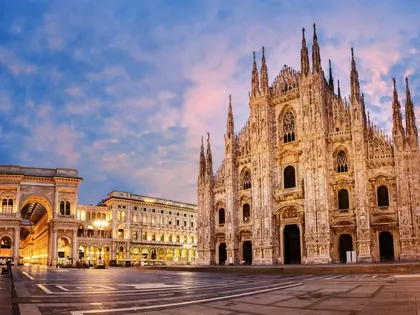
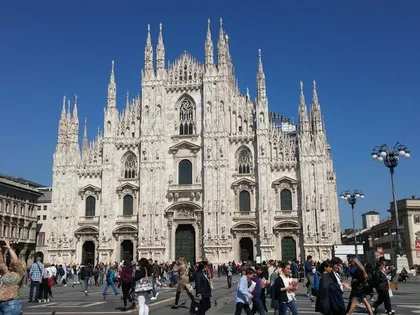
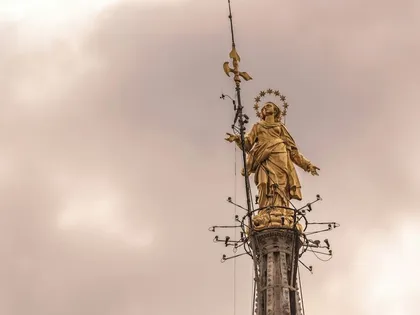
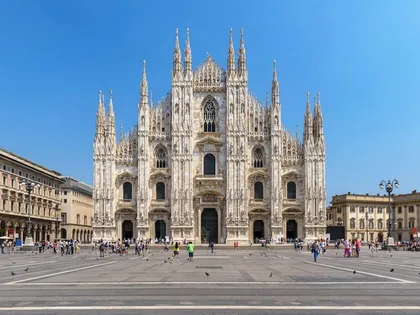
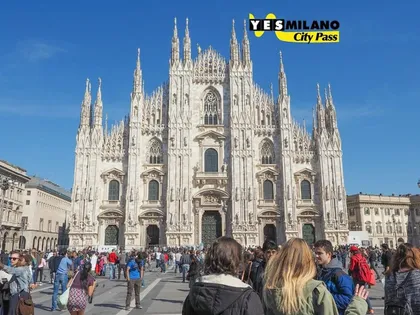
The Duomo is the one nobody regrets. Begun in 1386 and only given its façade in 1813 under Napoleon, it carries roughly 3,400 statues and 135 spires in Candoglia marble, with the gilded Madonnina of 1774 at 108.5 m. You can walk the roof — that is the unusual part. Duomo tickets sorts the four ticket types; Duomo rooftop covers lift versus stairs.

Honest expectations
Milan is not Rome and it is not Florence, and pretending otherwise is how people end up disappointed. There is no continuous historic centre; the Allied bombing of 1943 and post-war rebuilding left the old city in fragments between office blocks. Piazza del Duomo is magnificent and the streets three blocks away are ordinary.
What that means in practice: plan around specific places rather than wandering. The wandering is good in Brera, the Navigli and the Quadrilatero, and thin almost everywhere else.
Also expect a city that works. Shops and museums keep proper hours, the metro is clean and frequent, and August is genuinely quiet because Milanese leave. If you want atmosphere, come in a working month.
Money: how to structure it
Milan’s attractions are cheap. Nearly every museum sits between €13 and €22, which changes the maths on passes: the Milan City Card is €46.50 on Tiqets and only pays off if you clear four paid sights plus transport. Run your own shortlist through tickets and passes before buying one.
Three savings that are always real:
- Bundles. Tiqets discounts its “Duomo + X” pairings by 5% — worth it if you were buying both anyway.
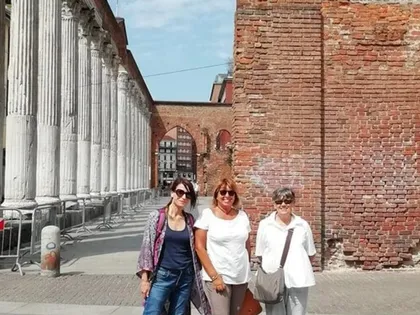
- Free entries. The Galleria, the Castello courtyards, Parco Sempione, the Colonne di San Lorenzo and the Navigli towpaths cost nothing. The Comune di Milano civic museums are free for everyone on the first Sunday of every month, and free for visitors up to 25 on the second Tuesday.
- Aperitivo instead of dinner. €10–15 with food included, against €35 for a sit-down meal in the centre.
Where you should not economise: the Last Supper. A guided slot costs more than the official ticket, but the official ticket is functionally unavailable at short notice.

Eating: what Lombardy actually cooks
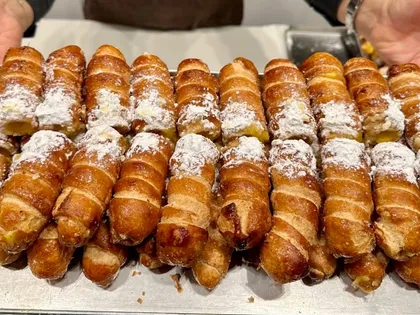
Forget the southern-Italian menu you may be expecting. Milan’s kitchen is butter, rice and slow cooking: risotto alla milanese yellow with saffron, cotoletta the size of a plate, ossobuco with gremolata, cassoeula in winter. Panettone is a Milanese invention and fills the bakeries from November.
Practical rules. Lunch runs roughly 12:30 to 14:30 and dinner rarely starts before 20:00. A coffee standing at the bar costs a fraction of the same coffee at a table, and nobody orders a cappuccino after a meal. Book anywhere good on a Friday or Saturday.
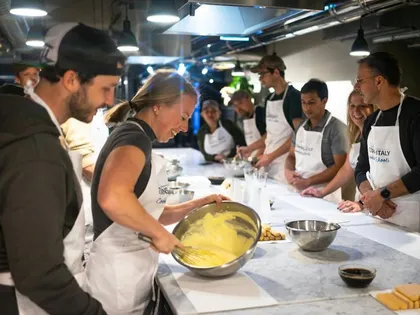
The cheapest good meal in the city is either a guided food walk, from €45, or an aperitivo. For a hands-on evening, pasta and pizza classes start around €58.90 — both on tours.
Getting in and out
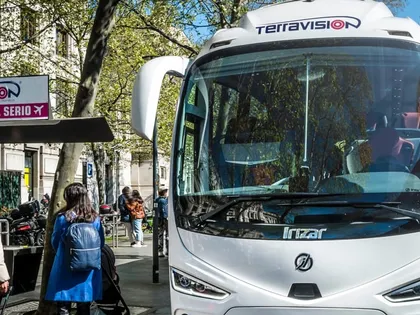
Three airports, all covered on airports and transfers. Malpensa is 50 km northwest with the Malpensa Express to Cadorna or Centrale in about 50 minutes and coaches to Centrale. Linate is 8 km east and now on metro M4. Bergamo Orio al Serio is 50 km northeast, coaches to Centrale in 50–60 minutes from €8.
By rail, Milano Centrale puts Turin, Bologna, Florence and Venice within a few hours on high-speed services — look up the exact timings for your date on trenitalia.com or italotreno.it, because the fastest paths run only a few times a day. That makes Milan a sensible first or last stop on an Italian trip rather than the whole trip.
Milan repays a short visit made with a plan. Book the Last Supper the moment tickets for your quarter are released, buy the €26 Duomo combined ticket for a morning slot, leave the evening open for the Navigli, and let the rest be decided by weather. Start from the ranked list on things to do in Milan, or straight from the ticket comparisons on Milan tickets.


Questions people ask
01Is Milan worth visiting?
Yes, for two or three days. It has Leonardo's Last Supper, Italy's largest Gothic cathedral, the country's leading opera house and its best shopping — but it is a business city, not an open-air museum like Florence.
02How many days do you need in Milan?
Two full days for the Duomo, the Last Supper, one gallery and a Navigli evening. Three if you want San Siro, a spa or a Lake Como day trip.
03What is Milan famous for?
Fashion and design, Leonardo da Vinci's Last Supper, Teatro alla Scala, the Duomo, two of Europe's biggest football clubs sharing one stadium, and the invention of the modern aperitivo.
04Is Milan expensive?
Attractions are cheap by Italian standards — most museums are €13 to €22. Hotels are where Milan costs money, especially during Fashion Week (womenswear 22–28 September 2026, then 23 February–1 March 2027) and the Salone del Mobile (13–18 April 2027).
05Which airport should I fly into for Milan?
Linate is closest, 15 minutes to San Babila on metro M4. Malpensa is the main long-haul airport, about 50 minutes by Malpensa Express. Bergamo Orio al Serio is the low-cost hub, roughly an hour by coach.
06Do I need a car in Milan?
No, and it is a liability. The centre is inside a charged low-emission zone, parking is scarce and expensive, and five metro lines plus trams cover everything a visitor wants.
07What should I not miss in Milan?
The Duomo terraces, the Last Supper, and one evening in the Navigli. If you only have a morning, make it the Duomo and the Galleria Vittorio Emanuele II.
Sources & official pages
- Duomo di Milano – official site
- Cenacolo Vinciano – official site
- ATM – Milan public transport
- YesMilano – official city tourism
- Trenord / Malpensa Express
- ATM – tickets and fares
- Comune di Milano – civic museum hours and free-entry days
- Salone del Mobile.Milano – official dates
- Camera Nazionale della Moda Italiana – fashion week calendar
Read next
- Things to doThe 20 best things to do in Milan, ranked and priced: Duomo terraces, the Last Supper, La Scala, Navigli and more, plus 1, 2 and 3-day plans.
- When to visitMilan month by month: average temperatures, rain days, Fashion Week and Salone crowds, August closures and Christmas. Pick your dates, then book ahead.
- Tickets & passesMilan tickets and city passes compared with real prices: City Card €46.50, City Pass €99, official passes, ATM fares. See when a pass actually saves money.
- DuomoWhat the Duomo di Milano complex includes, which ticket to buy from €10 official or €11.50 online, hours, rules and the quietest time to visit.
- The Last SupperLast Supper tickets in Milan: how the official €15 Vivaticket release works, when batches drop, and which guided tours have entry. Check availability.
- Nightlife & aperitivoHow aperitivo works in Milan, which districts suit which night, opera and live music, evening tours from €6, and how to get home after the metro shuts.